Confederation Park is one of Fergus’s cherished community parks with direct access to the Grand River. Centre Wellington is initiating a revitalization project for the park to ensure it continues to serve residents, visitors and the environment for generations to come.
The Township retained GSP Group Inc. to lead a comprehensive community engagement process and develop a Concept and Revitalization Plan for the park. Listening was central to the project, with residents’ ideas and concerns gathered through ongoing engagement activities and interest-group interviews helping to shape the guiding principles for the plan.
Project Update - October 2026
The project team has been working diligently to progress Phase 1 of the Confederation Park improvements based on community feedback and engagement that took place in 2025. During the spring of 2026, several site studies were contracted and completed, including an ecological study, invasive species management plan, and archaeological Phase 1 & 2 investigations.
The findings of these studies highlighted the ecological significance of the site and established a multi-year strategy for managing invasive species. As a result, the Township will begin implementing the recommended management measures during the fall and winter of 2026, including the selective removal, grubbing, and treatment of prevalent invasive species such as buckthorn.
Concurrently, the Township has retained a consulting team to prepare detailed construction drawings and permit applications for the remaining Phase 1 improvements. These works include the construction of an end-to-end accessible pathway, removal and replacement of the existing boardwalk, removal of the pavilion, and installation of enhanced wayfinding and interpretive signage.
Subject to approvals and permitting requirements, this phase of work is anticipated to be tendered and constructed in 2027.
One of the most exciting aspects of this project was the depth of listening that shaped it. Throughout the engagement process, staff actively heard residents' ideas, concerns, and aspirations. Multiple interest-group interviews were held to better understand priorities, identify key issues, and gather recommendations for the park and its trail network. Together, this multifaceted engagement approach created a strong foundation for developing the guiding principles for Confederation Park.
- Prioritize keeping the park natural.
- Enhance trail accessibility and add seating and signage.
- Invasive species management and careful lighting considerations.
- Improve access to the Grand River.
Overall, residents expressed a strong appreciation for Confederation Park's natural and tranquil character, along with a desire to see improvements that enhance safety, accessibility, and environmental health. Key feedback themes included preserving the park's natural setting, improving trail accessibility, managing invasive species, carefully considering lighting, and improving access to the Grand River.
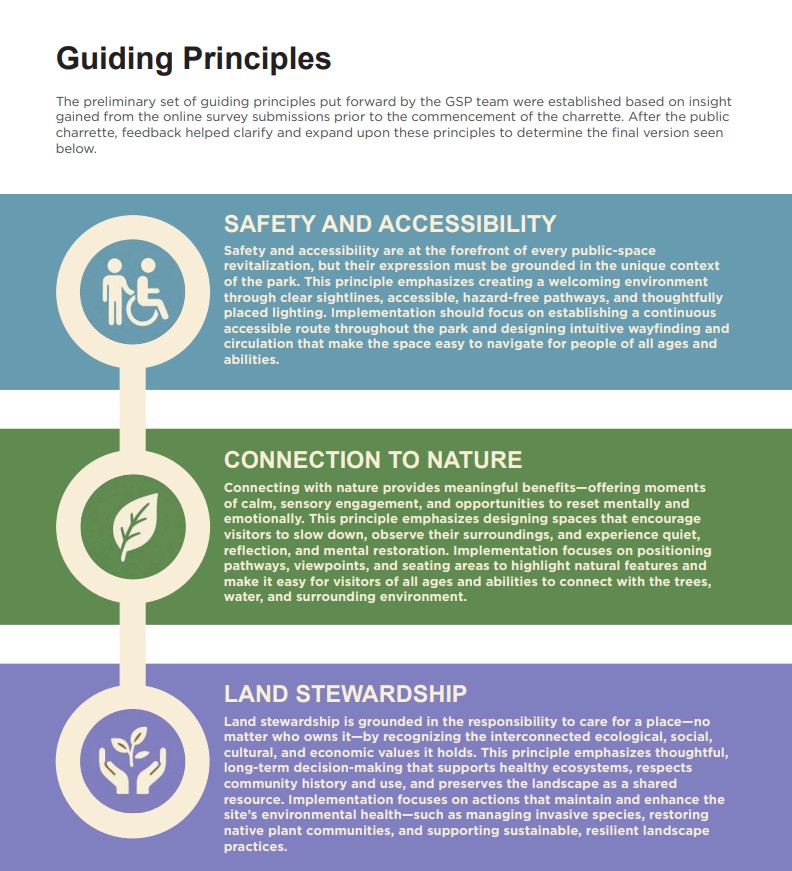
The project team established three Guiding Principles (Shown in the graphic below) for park enhancements based on insight from community engagement.
On Monday, February 9 Council approved the Confederation Park Revitalization Plan, marking an important step toward preserving and enhancing one of the Township’s most valued community spaces. The plan outlines a phased approach that prioritizes ecological stewardship and safety improvements first, while allowing flexibility for future enhancements as community needs and funding evolve.
Phased Approach
Phase 1 – Land Stewardship (2026)
Phase 1 focuses on foundational improvements to support ecological health, safety, and accessibility, including:
- Ecological assessment and invasive species management plan.
- Removals of invasive species.
- Removal of the existing pavilion and the remnants of a former structure located in a wooded area on-site, which are in poor repair and could represent safety hazards.
- Sightline clearing through removal of invasive species and brush, with emphasis on the preservation of mature native trees.
- Replacement of a deteriorated boardwalk and creek crossing with an improved accessible structure.
- Adding educational and advisory signage, providing detail on the history of Confederation Park from the perspective of Indigenous Communities and more recent settlers.
- Enhancement of seating options.
Phase 2 – Equitable Access (2027–2030)
- Complete accessibility upgrades at the Queen Street and Scotland Street parking lots.
- Construct a new accessible ramp switchback to provide better park access from the Queen Street parking lot.
- Create defined trailheads through signage, mapping, and enhanced trail maintenance.
- Construct an end-to-end accessible pathway through trail surface improvements and trail maintenance enhancements, while still preserving the recreational nature of the trail.
Phase 3 – Amenities (2030+)
- Construct two new picnic pavilions near park entrances at Queen Street and Scotland Street.
- Add natural play/gathering features in the park.
- Construct a new lookout deck, overhanging the Grand River.
- Include a new non-motorized boat launch upstream of the dam location, with a portage path and signage directing river travelers safely around the dam.
- Enhanced educational and interpretive signage
The phased approach allows the Township to respond to changing community needs and funding opportunities over time, while ensuring early investments focus on stewardship, safety, and accessibility.